
Links to articles in this chapter:
Broadhempston in Wartime
War Time
Prisoner of War
A Wartime Childhood in Staverton
Wartime Memories
An Evacuee returns to Broadhempston
BROADHEMPSTON IN WARTIME
When war broke out in 1939, I was ten years old and living in Sheen Road, Richmond. Opposite was a cul-de-sac and along the bottom ran the railway into Central London, which the German bombers followed. In 1940, I went to Kew Central School but my schooling was interrupted by air raids. In the four months I was there, we spent half our school life in the shelters and when we got home, we spent every night in the cellar with our neighbours.
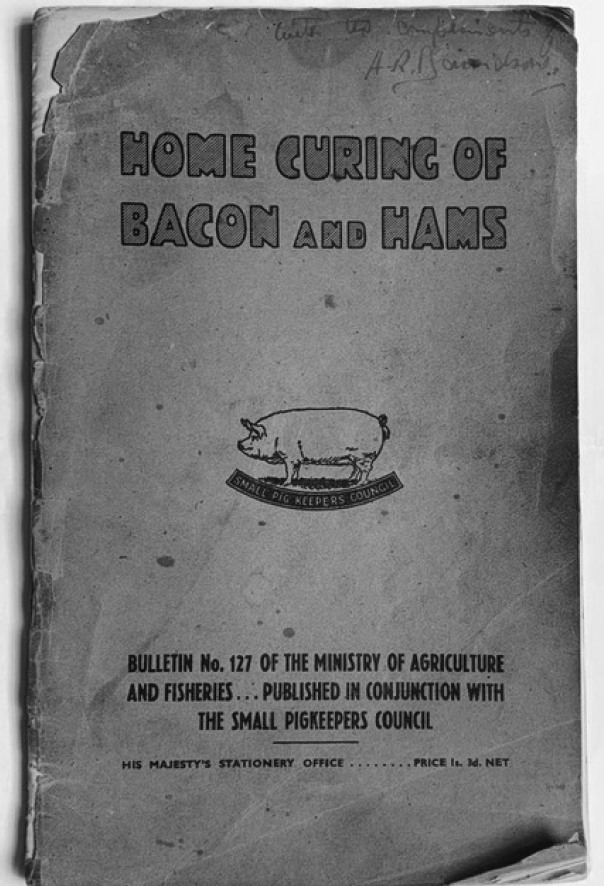 We tried to go to America, and had places to stay there, but ships were being torpedoed and we couldn’t go. However, my foster mother, Auntie Vi, had a sister in Torbryan, so in 1941 she visited Devon and managed to rent 2 Coleman’s Cottage in Broadhempston. She brought her niece and nephew and five other foster children. (Two had lost their home when a landmine hit it, just near to my home). I was the eldest.
The cottage had no electricity, a tap outside the back door, a toilet bucket at the top of the garden and we had to dig a hole to empty it. (We grew lovely nasturtiums). Auntie Vi had an allotment opposite the Church House Inn at Torbryan and we walked across the fields after school to meet her. Auntie had to cook on a double burners oil stove with an oven on top and a primus. The first time she lit it, the oil poured out and she ran and threw it out into the garden. Someone showed her how to use it after that. There were two bedrooms, so Auntie Vi slept on a wicker settee downstairs. No bathroom, of course, but a bungalow (tin) bath in front of the fire, and oil lamps.
Mr. Needs and his wife had a little shop up the road at 3 St.Joseph’s, and Auntie sent me to buy some potatoes. “Six pounds teddies?”, said Mrs. Needs. “No, potatoes”. “Yes, teddies” – I had to learn the Devonshire dialect. I can’t remember how long we were at Coleman’s Cottage, but later we moved to 2 Churchills in the Square and life was easier.
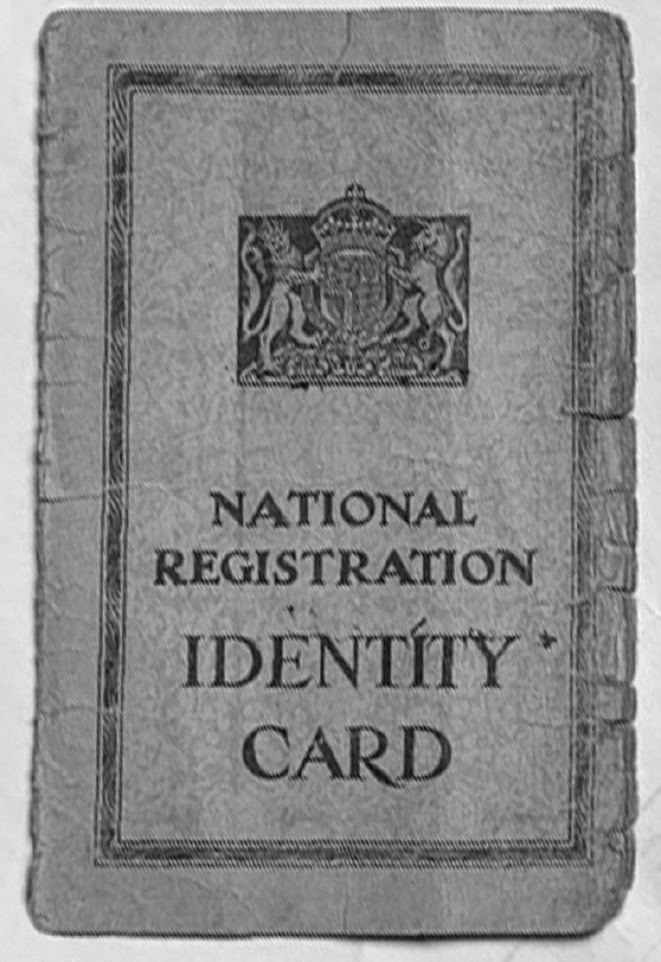 At first I went to Ashburton School, then passed the exam to Highweek Girls School, where Southwark Central School from London had been evacuated. We had classes in a cloakroom and the gym and did typing, shorthand and French in another house. There were only two buses to Newton Abbot a week, so Auntie arranged a lift to Ipplepen with Mr. Reg Harris, and from there I caught a bus. At one time I travelled by milk lorry, calling on all the farms and reaching Newton Abbot just in time for school. Coming home I caught the bus to Ipplepen and walked from there in all weathers.
There was a searchlight and army personnel past the Methodist Chapel towards Greet’s farm and one of our evacuees spent a lot of time there. Auntie asked him what he did and he said he went to the pub for their cigarettes and washed their socks! Once, the boys were late home for dinner and came in with matches and cigarettes. They told Auntie that the Americans at Kingston House sent them, because the boys said their foster mother couldn’t afford to smoke. They weren’t allowed to go to Kingston again, but of course they did.
After a time, the evacuees went back to London, but I stayed in Broadhempston until my marriage in 1953, when we moved to Landscove for the next 47 years.
Jean Carpenter nee Gosling, April 2004
WAR TIME
I was born in January 1941, a war baby I suppose you’d call me. Dad worked on the land but was also a member of the Home Guard. I don’t remember too much about the war, although I’ve been told that I used to run screaming in terror every time a plane flew over home. This was after German fighters shot at Ipplepen Church tower (that incident apparently first scared me). I can also remember being squashed under the stairs in the policeman’s house in Houndhead with other people, including Mum, when Newton Abbot was bombed, although I have no idea why I was there and not at home.
Between home and village two Nissan huts were built in Mr. Cleave’s field to house about a dozen soldiers who operated a searchlight at night. I used to like visiting them with Dad. Apparently they would provide Mum with the ingredients and she would bake cakes and apple tarts for them. We used to walk to the huts across the fields and cross the stream on the trunk of an oak tree that used to bridge the stream. Towards the end of the war and just after we used to see a lorry filled with German prisoners of war travelling the roads each morning and evening, taking the captives to work in the area. I don’t know where they were based. One day I met a ‘prisoners’ lorry as I was leading a carthorse with a cart full of mangolds down the hill from Waytown Cross. I know I stopped in fright as soon as the lorry came into view, the horse tried to stop as well but slipped up on it’s rear between the shafts of the cart because the road was slippery. Quite frightening at the time but the horse, Beauty, soon regained her feet and I led her past the lorry.
Those early days were pre-electric days for us – oil lamps in the living room and candles for the bedrooms. After the war was over we upgraded to an Aladdin Lamp. This was a great improvement in brightness – one wondered how on earth we used to manage to see with the oil lamp. Electricity finally arrived in the mid-fifties.
Clifford Rayment, May 2000
PRISONER OF WAR
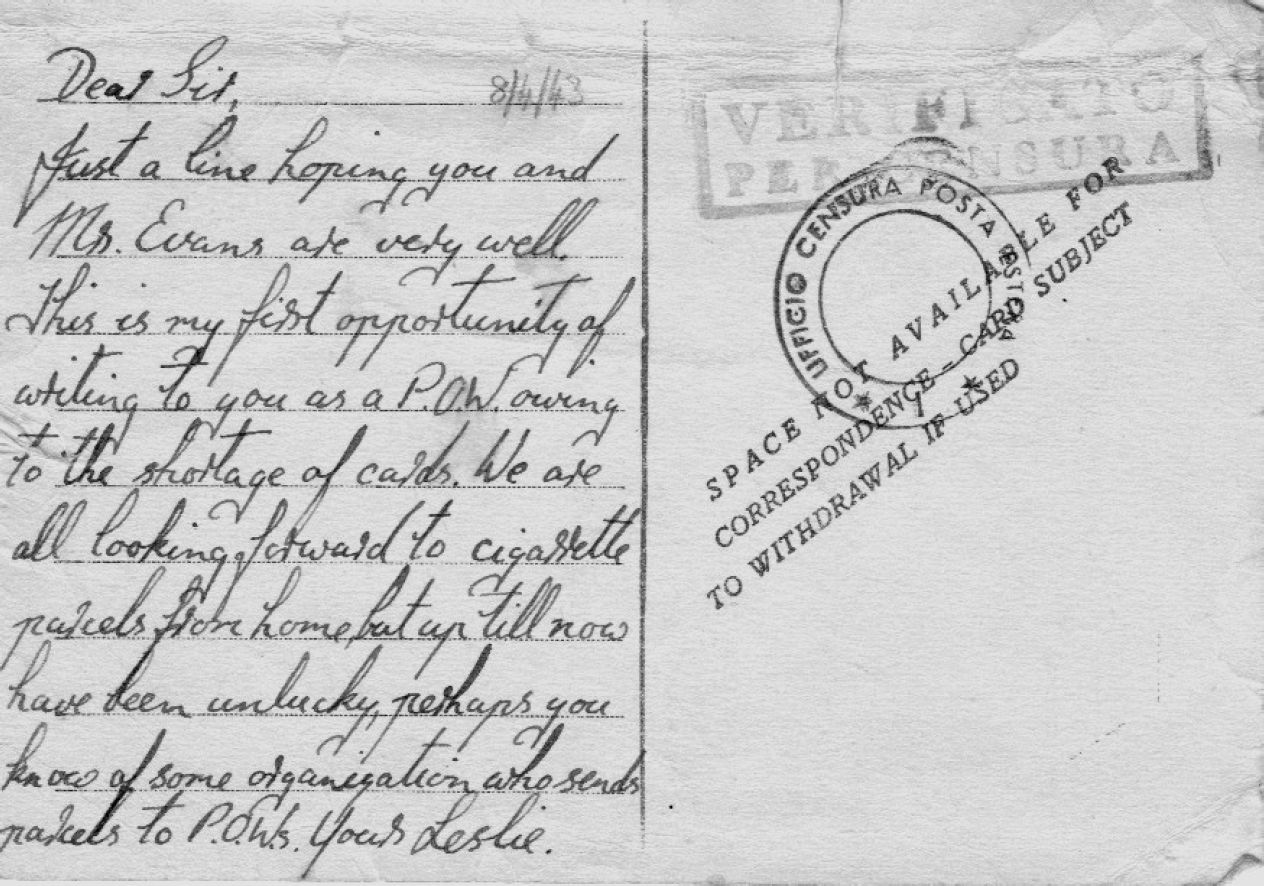
Mr. Leslie Hamlyn, who had been a prisoner of war in Italy, has, we regret to hear, been taken to Germany. After the capitulation of Italy, Mr. Hamlyn’s many friends had been looking forward to seeing him. It is good to hear that he is cheerful and in good health.
Editor, January 1983
A WARTIME CHILDHOOD IN STAVERTON
My name is Pauline Jordan nee Cullen and when I was four years I was evacuated to Staverton along with many others. I was born in Ramsgate and in 1940 it was a very dangerous place to live.
I have been back to Staverton many times, but this year I was thrilled to visit the house where I was billeted. In those days it was called Mill House, now it is known as Town Mills.
Visiting Nelson House was a joy for us children. We helped harvest eating and cider apples in their very large orchards. The shop was the meeting place for the villagers and I can still smell the aroma of freshly baked bread. There were no luxuries in those days but Staverton village shop always seemed to have some home-made products which were shared between the local people.
We loved going to Totnes on Bulliver, the steam train. We used to walk from the Mill House, through the meadow and Staverton Builders’ yard. It was such a treat.
In summer we played and swam in Still Pool, collected sticklebacks in jars and watched the salmon swimming. They seemed so big. We fished for eels in the leat with a bamboo cane and a bent pin. We used worms as bait, and had great success with this method.
In the Autumn, we were out early collecting mushrooms for breakfast. There were many evacuees at Mill House, mostly young children, so we had to help in whatever way we could. I later moved to Totnes and remember dancing in the streets on VE Day. Although I was only ten, I felt the relief and joy of that special time.
The years I spent in Staverton were some of the happiest in my life. The children who were evacuated to your lovely village were very lucky. We were greeted with kindness and love. We had hardships, of course, but we were fortunate to live in such a wonderful part of the country. Safe as you could possibly be in those dreadful times.
Pauline Jordan, November 1998
WARTIME MEMORIES
I was an evacuee in Broadhempston and for over twelve months, this was the most enjoyable period of my life. When evacuation from Plymouth was discussed, my parents had decided to keep me with them and we had gone through the blitz together. Lying in bed listening to the hum of the German bombers, getting up each night and going to the air-raid shelter, experiencing the bombing and the firing of a huge anti-aircraft gun nearby, then going on to school in the morning, became normal routine to me. At eleven years old, I cannot remember experiencing any stress, but my parents must have suffered.
After the blitz, when the offer of respite came from Capt. and Mrs. Tyler of Broadhempston, it was decided that my mother and I should go, and at week-ends my father would join us or we would return to Plymouth. A friend of Mrs. Tyler had recommended my father’s widowed sister, her two children, my mother and myself to the Tylers. It proved to be a wonderful experience for me, a very sheltered only child, and I learnt many things.
The Tylers lived in a large house with an attractive separate annexe (now Hempston House) where the master of the house had once entertained his sporting guests. It consisted of a large 40ft. room, with a bathroom and six or seven bedrooms upstairs. Elm Park itself was a typical big, old house and had the usual servants rooms behind the hall door – scullery, boot hole, pantry and so on. When we first arrived, they still employed a gardener, maid and nanny, although these gradually disappeared. The gardener was called up, the maid died in suspicious circumstances in the local quarry, and nanny eventually left.
Capt. and Mrs. Tyler seemed very grand to us. Capt. Tyler had been a tea planter in Kenya. His first wife died, leaving him with five children. He had re-married and Thomas had been added to the family. Whilst we were there, Paul was born and after we returned home, Catherine arrived.
Living in the annexe was a great adventure and we played with all the Tyler children when they were home from boarding school. The Tyler’s policy was that pocket money had to be earned – a bit of a shock to us. However, there were many ways of earning quite a bit of money – helping with the weeding, killing white butterflies, picking the shoots off stored potatoes, finding eggs that were sometimes all over the orchard and, best of all, picking up cider apples – even those from which we had taken a bite.
My father joined us some week-ends, walking from Shinner’s Bridge, Dartington and returning again late on Sunday night. At other times, my mother and I would go to Plymouth at the week-end. This meant getting up very early in order to catch the bus at Shinner’s Bridge. In winter, this walk in both directions, would be in pitch darkness owing to the blackout. Apart from the twice weekly bus to Newton Abbot, we had to walk everywhere and it became essential to have a bicycle. This was my twelfth birthday present. Bikes were our salvation and journeys were taken and shared in a way not possible now. One person would ride for about a mile, leave the bike in the hedge and walk on. When the other person reached the bike, they would mount, ride on until they passed the other person, and so on to the end of the journey. Thanks to our bikes, swimming was possible in the river Dart at Staverton. There was a weir in the river and behind it a natural pool where we swam. With Mrs. Tyler’s help, I learnt to swim in the cold fresh water. Many years later I returned to the area and the whole course of the river had changed. In fact, if it were not for the bridge and Staverton Station, I would not have believed it to be the same place.
School had to be attended and my cousin Mary and I were entitled to go to grammar school as we had both passed the scholarship exam. The nearest was Totnes, but there was no means of getting there. Ashburton Secondary School had a bus for the local village children, so it was decided that we should go there. Remembering the school bus still makes me smile. Mary and I were products of girls’ grammar schools in Plymouth where we were taught to be ‘ladies’. The children on the bus were village children and, more noticeably, London evacuees, East Enders and quite rowdy. Just imagine Mary and me, sitting there primly in our complete school uniform, which meant hats and gloves. Strangely, I can’t remember any trouble.
I went to Ashburton school for two weeks and loved every minute of it. I learnt three useful things – laundering, smocking and how to climb a rope. But sadly the education authorities decided I should attend Newton Abbot grammar school. To get there meant a walk up the hill to a neighbour who took us by car to Ipplepen, where we caught the bus to Newton Abbot. The return journey was memorable. The Devon General bus returned us to Ipplepen, but that was three miles from Broadhempston, so Mary and I had to walk home every day. Petrol was rationed, so a car on that journey was very rare. Our only hope was on a Wednesday when a local farmer might pass by and give us a lift on the back of his lorry. However, the walk gave Mary and me a great love of nature and we learnt to recognise and look out for birds and plants as we went along. We were told to keep to the roads, but we did know one or two shortcuts across fields. The farm at Poole, round about half way, was a welcome sight, especially in Spring when, if we were lucky, we could bottle-feed a lamb. Surprisingly, they were not so cuddly as they looked, sticking their little legs straight out. Eventually we would reach the top of the village and would come down the hill into the main street; this was a long road, but at the end of it we turned up the hill into the village square, full of relief as we were just around the corner from home. Rainy days are still to be remembered. The first mile you got wet; the second you were drenched and by the third you were past caring. But mum was waiting at the end with a change of clothes and tea.
At the end of my school year 1942, raids on Plymouth had almost ceased and we decided to return home, leaving my aunt and cousins to stay on for some time.
Doreen Johnston, May 2004
AN EVACUEE RETURNS TO BROADHEMPSTON
A few weeks ago we had a most moving visit from an elderly, disabled lady who had been evacuated to Broadhempston more than sixty-five years ago and who had spent three happy years living in our house.
Pam Heaton came from a poor area of South-East London and she was just five years, when in June 1940 she was sent to Broadhempston. She could remember being in the Village Hall, wearing a red blazer, while the Vicar was in charge of distributing children to various families in the village. Pam was eventually allotted to the Burbury family who lived at Sneydhurst. It must have been an incredible change for her going to live in a six-bedroom house with, in those days, a live-in maid. Her bedroom was a little box room which has marvellous views over Dartmoor.
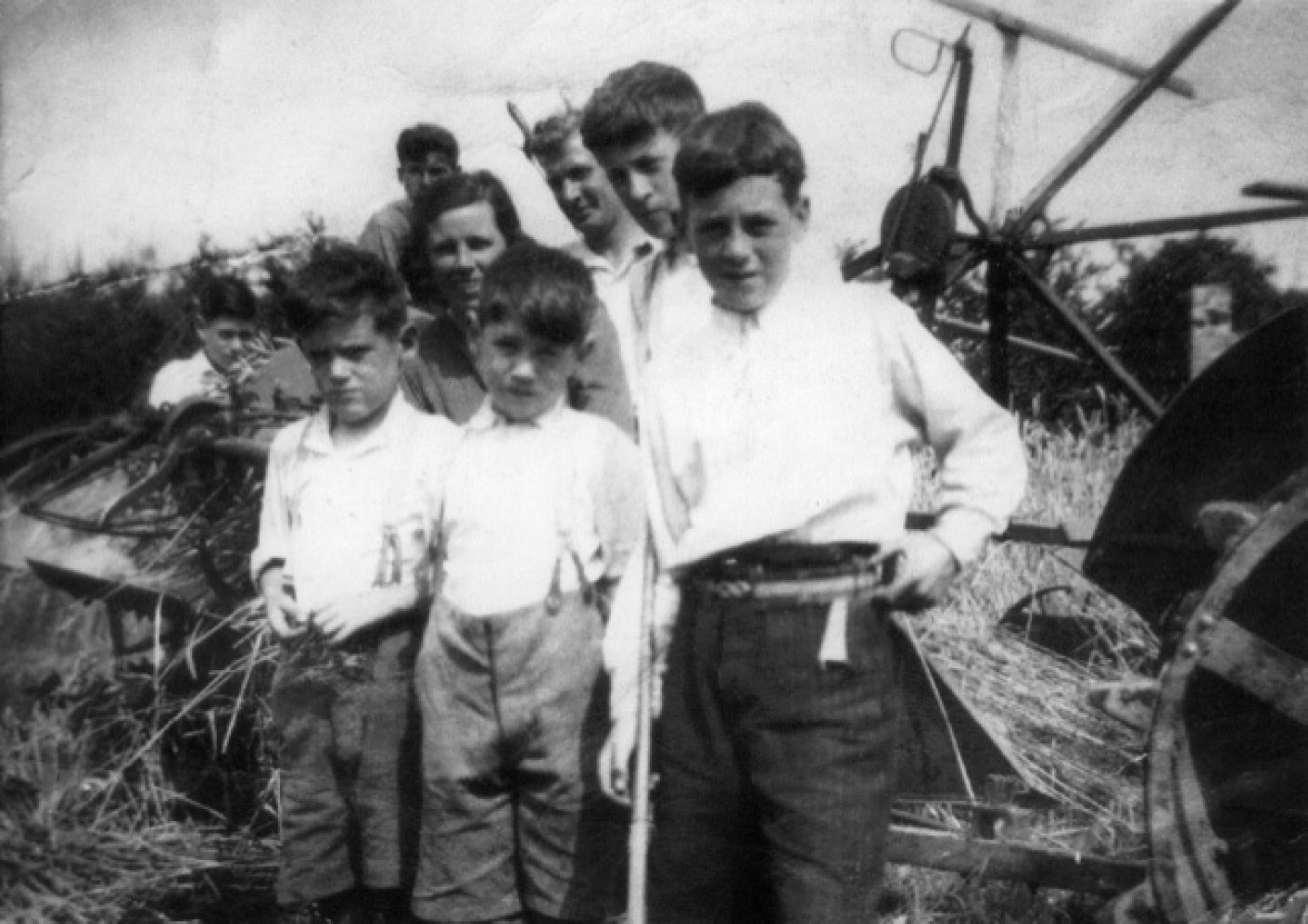
Because Pam was so young when she lived here, her memories of Sneydhurst were quite selective and sketchy. She remembered the large stone dog kennel built at the back of the house and the family’s maid doing all the laundry in a large copper down in the cellar. She could also remember cider being made down in the cellar.
Mr. Burbury was a distant figure whom she hardly remembered at all, but Mrs. Burbury was very kind and Pam was allowed to call her ‘Aunty May’. Young as she was, Pam and the other evacuees realised that many village people did not like them, or want them in Broadhempston, so Pam felt very fortunate to be with Aunty May. She clearly enjoyed going to the village school and liked the local children.
Chatting to Pam now about wartime in Broadhempston, the thing which struck me most forcefully was the huge gulf that existed between the social classes at that time. Apparently, the day Pam arrived at Sneydhurst, Mrs. Burbury asked her if she liked strawberries and cream. Pam’s reply – in broad cockney – was “not ‘alf Mrs”. She was then sent to have all her meals in the kitchen with Myrtle, the maid, until she learnt table manners and how to speak correctly. Only then was she allowed to eat with the family in the dining room.
The story had a rather sad ending. Pam never heard from her own mother throughout the three years that she lived at Sneydhurst. Mrs. Burbury obviously became very fond of Pam because in 1943, she tried to adopt her. Pam was immediately whisked back to her mother in London. There she rapidly had to unlearn her posh table manners and cease to ‘talk proper’ in order to avoid being bullied at school.
Nevertheless, for the whole of her life Pam has cherished wonderful memories of the halcyon three years which she spent in Broadhempston. So much so that her three daughters made a huge effort to bring her to Devon to find Sneydhurst while their mother was still fit enough to travel.
Ann Zealley, December 2008